Sunday, 30 December 2012

'Consider the Fork' Chronicles Evolution of Eating

Did you know that the human overbite may have evolved after people began using forks and knives? In Consider the Fork, author Bee Wilson traces how kitchen tools—from knives to pots to gas stoves—have changed over time, and how they have influenced what, and how, we eat.

Copyright © 2012 National Public Radio. For personal, noncommercial use only. See Terms of Use. For other uses, prior permission required.

IRA FLATOW, HOST:

Simple things like a pot or a wooden spoon or maybe even some of the more modern conveniences like a refrigerator or a gas stove. And to answer those questions and more, my next guest looked through the historical and anthropological records and found that how we cook, what we eat, has been largely influenced by social, economic and even political factors throughout the ages. Bee Wilson is a food writer and historian based in Cambridge, England. She's author of the new book "Consider the Fork: A History of How We Cook and Eat." Welcome to the program.

BEE WILSON: Thank you. Hi.

FLATOW: Do we know how and when humans first started to cook?

WILSON: We know it was a really long time ago. I mean it depends which anthropologists you listen to, but I mean it's several million years ago that fire starts. And according to Richard Wrangham in his fantastic book "Catching Fire," cooking was the defining act that actually made us human, because by applying heat to food it meant that we were able to eat of a wider range, and it meant that our brains were able to grow large enough that we made that leap from primate to human.

But for me, the great beginning of cookery is the invention of the pot, much more recently in historic times, 10,000 years ago. And I think pots and pans are one of the many inventions in our kitchen that we don't even recognize as being inventions, because they've been around for so long. But if you imagine...

FLATOW: Like the fork.

WILSON: Like the fork. I mean the fork is, in historic times, extremely recent, and now, arguably, it's the most universal utensil. It's used at every kind of meal ,from a fancy three-course dinner with silver-plated or stainless-steel cutlery, to a fast food meal where you might be using a plastic fork. And yet, it encountered huge resistance when it was first introduced. And for a long time in Europe, it was only the Italians who used forks. The reason being pasta, as we all know, forks are the perfect implement for twizling(ph) long strands of noodles or spaghetti.

But in the rest of Europe, particularly Britain, they thought that forks were just these weird, effeminate, unnecessary objects, which we could do fine without. And this whole question of cutlery, it seems rather irrelevant compared to what we eat, and yet, if anthropologist called C. Loring Brace is correct, the adoption of the knife and fork at table, which happened roughly 250 years ago in society at large in Europe and then in the States - if he is right, then the adoption of the knife and fork actually had these profound implications on the structure of the human jaw.

And it was only around that time that human teeth moved from having an edge-to-edge bite, such as you would see in apes, to having the overbite that we have today, where the top layer of teeth fit over the bottom layer, like the lid on a box. This is far too recent a change for there to be any evolutionary or Darwinian explanation. And what Brace decided after studying many, many human jaws was that the only change that happened in that - at that time, wasn't what people ate, but it was how we ate.

And it was through the process of cutting food into small morsels from childhood onwards that we actually change the way that our jaws work. And the real clincher was that he found this change 900 years earlier in China, the reason being chopsticks.

FLATOW: We're talking about food this hour on SCIENCE FRIDAY from NPR. I'm Ira Flatow, talking with Bee Wilson, food writer, historian and author of "Consider the Fork: A History of How We Cook and Eat." Are our cooking and eating habits continually evolving, Bee?

WILSON: On the one hand, they're constantly changing. On the other hand, there are things which have been in our kitchens - not that kitchens have existed in their modern form - for thousands of years. Things like the mortar and pestle, which is very similar in form today to how it would have been in ancient Rome or ancient Mesopotamia even. Or things like the colander, which again, beautiful colanders exist in Pompeii and Herculaneum - and frying pans, beautiful ancient Greek and Roman frying pans.

So some things have remained constant - wooden spoons, nothing really does the job of a wooden spoon better than a wooden spoon, which is why perhaps it hasn't been replaced. And there's also always a role for the affection we feel, I think, for certain implements and...

FLATOW: Yeah, yeah.

WILSON: ...yeah, we're tied to the way that our mothers and grandmothers cook through a certain degree. And then there are other things, like really good vegetable peelers that do the job of peeling vegetables as efficiently as possible without hurting your hand, which have only been in our lives for about 20 years, give or take. So I think there's a sort of constant interplay between continuity and change, and the tools which were adopted - it's never just to do with how well they work technologically or scientifically on their own terms. It's always how they fit into a wider culture of cooking and economy, and how we feel about these.

FLATOW: You know, the - I think one surprising object we all have now is the microwave oven because we don't - I don't think we really think of it as a cooking thing, but as a reheating thing, don't we?

WILSON: That's right. I mean I think the microwave oven, it's an astonishing invention. I mean there are various mythical stories told about its invention. It was invented by someone called Percy Spencer in 1945, who's actually working on military radar systems. He had no idea he was going to invent one of the most successful cooking tools of all time. And there are these various stories told of how he was standing in front of an open wave garden, a chocolate bar melted in his pocket, or in another version, an egg exploded in his face, or there's this third one where he left his sandwich next to the magnetron and then he came back and find it was cooked.

Actually, none of this is probably true. It was actually developed through a series of slow observation by the whole of Spencer's team. But, um, I think the microwave oven it's a phenomenal invention, but it had the misfortune to be invented and marketed at just that point in history when TV dinners and processed food and all of those supermarket meals (unintelligible) had been taking off. So it was seen as a device, merely for heating food up. And it's - lots of home - very good home cooks that I know feel really hostile towards the microwave oven in a way that I think they don't towards many other cooking tools.

FLATOW: Yeah, yeah.

WILSON: And actually, its true culinary potential is only now really been recognized by the modernist cooks, people that make the (unintelligible) fantastic tools of melting chocolate, caramelizing sugar, steaming vegetables.

FLATOW: Yeah. All right. We're going to get - very interesting, talking with Bee Wilson, author of "Consider the Fork: A History of How We Cook and Eat." Jack Bishop, chef and editorial director, also a contributing writer for The Science of Good Cooking. We'll take your calls when we get back. 1-800-989-8255. Stay with us. We'll be right back after this break.

I'm Ira Flatow. This is SCIENCE FRIDAY from NPR.

(SOUNDBITE OF MUSIC)

FLATOW: You're listening to SCIENCE FRIDAY. I'm Ira Flatow. We're talking about the chemistry, the science of cooking with Bee Wilson, author of the book "Consider the Fork: A History of How We Cook and Eat;" and Jack Bishop, who's also with us. He is a cast member of "America's Test Kitchen" and "Cook's Country." Our number, 1-800-989-8255. I want to ask you a question, Bee. I'm going to quote from your book that says we've been talking about chemistry here in the first part of the program with Jack, and you say good cooking is a precise chemical undertaking.

The difference between a truly great dinner and a different one might be 30 seconds and one quarter of teaspoon of salt. And you go on to talk about how recipes - I think it was Fannie Farmer who you mentioned in your book - was the first one to actually write down these things.

WILSON: Yes. And I think that there's a sudden change in the nature of what a recipe is. For most of history, recipes were aid memoirs. They were sort of memory devices for people who already know how to cook. It wasn't instructing you in how to cook if you didn't know how to. Whereas Fannie Farmer had grown up not knowing how to cook herself, she learned relatively late in life, and she never took it for granted. And so her recipes, for the first time, are actually attempting to cook, teach her readers from scratch, how you can make something if you've never done it before and how it can be reproducible in the same way that a scientific experiment might be.

And unfortunately, the measuring system that she chose, the American cup measure system, is in my opinion one of the most erratic and prone to fluctuating results, particularly when it comes to cake making because there's a problem of density. So I don't believe that she succeeded in her aim of being a fully scientific cook. But then probably no one does because there's always this interplay in cooking, between the extent to which it is a precise chemical undertaking and then the role of instinct...

FLATOW: Yeah, yeah.

WILSON: ...and cooks, as our scientists, we're always juggling variables, aren't we? It's never quite the same kitchen that we walk into twice.

FLATOW: So how did writing this book changed how you thought about your own cooking?

WILSON: It made me realized many of the things I did already - there was this kind of huge history of invention behind these tools which I just kind of use without thinking about it. And in any case, this confirmed me in some of the ways that I like cooking. It made me really think about the fact that I do like certain pots or certain pans more than others, and sometimes it - rationale like I really like my cast-iron skillet whether it's for making pancakes, or cornbread or anything like that.

And then I came across the work of this engineer called Chuck Lemy(ph) who had attempted to come up with what the ideal surface would be for a pan, rating it according to nine different criteria. And he found that actually lots of the things that we want for our pan are completely incompatible. We want a pan to be very thin, so that it's very responsive to heat, but we also wanted it to be very thick so that it has good heat uniformity. And he found that it was virtually impossible to have come up with the perfect pan. But the one that came closest made out of single material was cast iron, and I read this and felt very vindicated in my effects, probably...

FLATOW: Yeah.

WILSON: ...I would like it even if it wasn't such a perfect pan. So I think a large part of - it concerned me is my habits and as for others - I mean in finishing writing the book, I acquired a pressure cooker, which I think I wouldn't have done if I hadn't been researching the subject because it made me realized when I was considering the kind of modernist kitchen and the kitchen of the future, the extent to which we've often just been dealing with the variables of heat and time and quantity, and then there are all these other things that we can do, such as pressure...

FLATOW: Right, right, right.

WILSON: ...which are only just now being opened up. And I think there's always huge possibilities for cooking things in a different way, which I find very exciting.

FLATOW: Well, we've run out of time. I want to thank you both for being with us today. Bee Wilson, author of the book "Consider the Fork: A History of How We Cook." Jack Bishop, chef and editorial director of "America's Test Kitchen," also he's on "Cook's Country" and also one of the contributors to The Science of Good Cooking. Thank you both for taking time to be with us today.

JACK BISHOP: Thank you, Ira.

WILSON: Thank you.

FLATOW: Happy New Year to you. Happy holiday season.

Copyright © 2012 National Public Radio. All rights reserved. No quotes from the materials contained herein may be used in any media without attribution to National Public Radio. This transcript is provided for personal, noncommercial use only, pursuant to our Terms of Use. Any other use requires NPR's prior permission. Visit our permissions page for further information.

NPR transcripts are created on a rush deadline by a contractor for NPR, and accuracy and availability may vary. This text may not be in its final form and may be updated or revised in the future. Please be aware that the authoritative record of NPR's programming is the audio.


View the original article here

Saturday, 29 December 2012

Chef Jack Bishop on 'The Science of Good Cooking'

What's the secret to making a fluffy omelet or the perfect pie dough? Jack Bishop, chef and editorial director at America's Test Kitchen, stops by to debunk cooking myths and highlight some of the surprising finds from the show's new cookbook, The Science of Good Cooking.

Copyright © 2012 National Public Radio. For personal, noncommercial use only. See Terms of Use. For other uses, prior permission required.

IRA FLATOW, HOST:

This is SCIENCE FRIDAY; I'm Ira Flatow. Chefs are like, a little bit like golfers: They're always looking for tips to improve their game. So as you prepare for the last big party of 2012 or the first one of 2013, we have some gastronomical tips to improve your cooking and baking skills and the reasons behind why they actually work.

What's the trick to making a perfect pie dough? We have the answer to that, and I think it's going to surprise you. How do you poach an egg without turning all the boiling water into a swirly mess of egg whites? We're going to teach you how to do that, too. It all boils down to this: If you want to unlock the secrets of good cooking, you have to understand the science.

That's the idea behind the newest cookbook from America's Test Kitchen, "The Science of Good Cooking." It's really a great cookbook to have in your arsenal because it meticulously explains what works, what doesn't and why. And my next guest is here to give us a glimpse of some of the Test Kitchen's more surprising finds.

JACK BISHOP: Jack Bishop is a chef and cast member on the cooking shows "America's Test Kitchen" and "Cook's Country." He is the editorial director at America's Test Kitchen and contributed to the show's newest cookbook, "The Science of Good Cooking," and he joins us here. We're cooking in our New York studio. Welcome to SCIENCE FRIDAY, Jack.

Hi Ira, great to be here.

FLATOW: We are surrounded by cooking stuff.

BISHOP: I know, we don't really - you know, the are wires and all the radio things with cooking things. Let's hope it goes well.

FLATOW: Well, let's get right to the first thing. We have a pot of, a simmering pot of water here. Well, it's not actually a pot, is it?

BISHOP: It's a skillet. So I am going to re-teach you how to poach and egg, and you're going to be successful.

FLATOW: In a - I've never done it in a skillet. Usually I take the big pot of water, and that's wrong, you're saying.

BISHOP: You're - the big problem with the saucepan, if you're doing a narrow pot, it's a long way down for the egg to drop into the pot. A lot of people crack it right on the side of the saucepan, and then it falls apart. I mean, the challenge when you're poaching an egg is to keep the white to surround the yolk, so you end up with a set white and a creamy yolk.

FLATOW: All right.

BISHOP: The skillet makes it much easier. So I've got boiling water in a 12-inch skillet. You can use a smaller skillet if you'd like. And I - the trick here is we're going to gently coax the eggs in. So I've got two teacups, one in each hand. They have little handles on them that allow me to get close to the water, and I've got two eggs cracked into each, and I'm just going to turn them ever so gently into the skillet.

And I'm going to add a little bit of vinegar. The pH is going to help...

FLATOW: Ah, the acidity is going to help.

BISHOP: And a little salt really just for flavor, and I'm going to turn off the heat. The other big mistake people make is they boil, and the turbulent water will cause the eggs to break apart.

FLATOW: You don't want to boil it.

BISHOP: And now I'm going to turn my timer on. And so by using residual heat, you are sort of - no churning of the water, so you're not going to blow apart the eggs. And you also get a really consistent result because, you know, if you've got a really powerful cooktop, it can be going much sort of faster coming back to the boil, and we're basically just doing it with residual heat.

If you were doing it on a real cooktop, we're on a little induction burner, you might even slide it off the burner onto a cool burner. We don't have a cool burner, so we're going to hope this induction burner cools down.

FLATOW: And the vinegar coagulate the egg whites, is that - the acid does that?

BISHOP: We're lowering the pH of the water, and that helps the proteins in the white to sort of unfurl more quickly and bond together and hopefully protect the creamy yolk.

FLATOW: Could you use lemon juice instead?

BISHOP: You could use lemon juice. I just use distilled white vinegar. You don't want to use a colored vinegar, like balsamic would give you lightly tinged whites, which may not be that attractive. But, you know, the vinegar will give a little bit of flavor to the eggs, balance a little of the richness to the eggs, which is a good thing. So we like that.

FLATOW: Well, while we're waiting for the eggs to cook, let's talk a little bit about more in your book. What is the secret - I heard, I read the secret to the perfect pie crust, and it's something I would have never imagined. Tell us what that is.

BISHOP: You know, pie dough seems like it should be simple. It's really just four or five ingredients. There's flour, salt, a little bit of sugar, fat and ice water. The problem is that most recipes are engineered to use a minimum amount of ice water, and the theory is that when the water is mixed with the flour, you are activating the glutens, and you're developing this sort of strand of protein network, which is great if you're making bread. It's what gives bread great chew.

But in pie dough, it will make it fairly tough, and so you use as little water as possible in order to just get the flour to sort of hold together with the fat. The problem is most recipes don't use enough, and so you go to roll out the dough, and it's cracking, it's really difficult to manage, and most cooks end up adding more water than the recipe says.

A typical recipe for a double-crust pie will call for five or six tablespoons of water, but it's really not quite enough. So we said: What is wet that could give us more moisture so that we could hydrate the dough and make it easier to roll out with less cracking but would not form gluten? And it turns out that alcohol does not form gluten when it's mixed with flour.

And so we replaced half of the ice water with chilled vodka in our pie dough.

(LAUGHTER)

FLATOW: Do you need a high brand vodka, first-shelf vodka, or...?

BISHOP: You're not going to taste it because what happens is in the oven, when you're baking the pie crust, the alcohol's going to cook off. We tested whiskey, rum, tequila...

FLATOW: What a party that was testing...

BISHOP: Oh yeah, and we have - we were testing them, unfortunately, in the pie dough.

FLATOW: I see.

BISHOP: You cannot taste the difference, really, between all of them. The important thing is to use something that's 80 proof, that's 40 percent alcohol, so that you are in effect, where our recipe calls for four tablespoons of water and four tablespoons of vodka, but because of the alcohol in the vodka, it's really the equivalent of six tablespoons of water, even though you get the sort of rollability of eight tablespoons of water.

And it seems like it's a really small trick, but it makes it so much easier to roll out the pie dough, and it's really flaky, and it's really tender.

FLATOW: So does this come about from actually testing things in the Test Kitchen, the ideas and recipes?

BISHOP: The Test Kitchen has about 25 people who work full-time who are trained cooks. We also have a science editor. And so this was one of those questions that we discussed with our science editor. We said: What's wet that you could add to pie dough that's not going to form gluten? And he said, well, alcohol. And, you know, then we went into the kitchen and ran a series of tests.

Our usual protocols will do sort of one variable test. And so, you know, we'll do the standard recipe with water, and then we'll do variations, in this case with vodka, and easy to tell the difference.

FLATOW: So people who have picked up their ears now from hearing this, what's the recipe, how much vodka for how much water?

BISHOP: So you want to use half-water and half-vodka. If you have a favorite pie dough recipe that calls for ice water, just replace half of the water with chilled vodka. It's really important that the water is cold so it doesn't melt any of the fat in the dough.

FLATOW: Wow, talking with Jack Bishop, chef and cast member on the cooking show "America's Test Kitchen" and "Cook's Country," also contributor to Cook's Illustrated "The Science of Good Cooking: Master 50 Simple Concepts to Enjoy a Lifetime of Success in the Kitchen." A great book. Why did you decide - did you decide that people needed to know more about science in the kitchen?

BISHOP: We really feel like science is the key for many people to finally become a good cook. You know, I think there's a sort of generational issue that many people didn't grow up in homes where they could watch cooking. And so how do you learn how to cook? And a lot of people get frustrated because they make mistakes and think oh, I shouldn't be making mistakes. Well...

(SOUNDBITE OF TIMER)

FLATOW: You'd better...

BISHOP: We're a slave to our timer here.

(LAUGHTER)

BISHOP: So that means our poached eggs, you're going to have to wait for my answer on this one.

FLATOW: OK.

BISHOP: So I'm going to take the lid off of the skillet.

FLATOW: Right. Ooh, those are gorgeous.

BISHOP: I'm going to now reach in with a slotted spoon to try to take out each of the four poached eggs. I'm going to transfer them to paper-towel-lined plates. The paper towel is going to soak up the extra water that is still on them. The slotted spoon is getting rid of most of the water, but there's still some in there.

And as you can see, they came out fairly nice.

FLATOW: Thank you, that's great, very little white left in the water.

BISHOP: Very little white. I think you might want to at this point season them with a little bit of pepper, make them taste a little bit. And I think, Ira, you have to do - you have the honors.

FLATOW: Somebody has to take over the show while I eat here.

BISHOP: You at least have to sort of crack and see...

FLATOW: All right, crack one open. This looks good because poached eggs are among my favorite food. I need a little English muffin here, I think.

BISHOP: Yeah, I didn't bring the Canadian bacon and English muffin. Now five minutes gives you a runny yolk.

FLATOW: That is good. OK (unintelligible)...

(LAUGHTER)

FLATOW: A runny yolk, do if you overcook it, it's going to get a little harder, and five minutes works. But the secret, as you said, is not boiling the water but simmering it...

BISHOP: And the five minute works whether you're doing one egg or eight. If you're going to do more than eight, you might want to go to six or seven minutes because there are so many eggs in the water. And of course if you want a more set yolk, you could go an extra minute. But for a sort of runny yolk, five minutes is sort of guaranteed to work.

FLATOW: And eggs are a good place to start if you want to learn about the science of cooking, right? There are so many things you can do with eggs.

BISHOP: It's - you know, they don't call it the incredible egg for nothing because you really can do so many things, not just different cooking methods. You can, you know, scramble it, you can fry it, you can poach it, but it's a key ingredient in so many savory and baked goods.

FLATOW: If you're making scrambled eggs, or you're making just plain sunny-side-ups, is there a perfect temperature that you want? People throw it in, you know, they heat the skillet up very hot, and then they throw the egg in, and it's sizzling. Does that wreck the egg, or do you want to cook it on a lower temperature?

BISHOP: For scrambled eggs, the key is fairly high temperature because what you're trying to do is convert the water that's in the eggs - and we also add some half-and-half to our scrambled eggs.

FLATOW: Oh, you do?

BISHOP: Yeah, the fat keeps them tender, and the additional moisture creates steam, which is what makes them fluffy and light. And so if you're using low temperature for scrambled eggs, if you want really fluffy, light eggs, you're not generating enough steam. So you want fairly high temperature, and you have to work really quickly because you don't want them to get tough or brown.

For fried egg, we actually heat the pan over low for 10 minutes, trying to get a really even heat, then crank it up so there's no hot spots, and add the fried egg.

FLATOW: Should you use a smaller pan, like an omelet pan, for one or two eggs, or should you use a bigger pan?

BISHOP: A small pan is much better, yeah.

FLATOW: A small pan, and that will take - an omelet pan, which is a lot thicker metal, will take a longer time to heat up at that lower temperature.

BISHOP: And it will be a much better job.

FLATOW: OK, a couple of egg lessons. What's the biggest mistake people make with eggs? Is it they use the wrong temperature, or they just don't treat it with respect?

BISHOP: Yeah, that they don't add enough fat, usually. In most egg recipes, what you're doing is you're coagulating the proteins. And, you know, there the tendency is to then squeeze out the moisture. And if you add a little bit of fat, whether it's a little half-and-half in your scrambled eggs - when we make an omelet, we add little cubes of frozen butter to the scrambled - you know, to the eggs that we've sort of beaten by hand so that there's a little bit of fat in there to ensure a sort of nice soft set that doesn't squeeze out the moisture in the eggs and make them tough.

FLATOW: Cubes of frozen butter in the omelet. I have to remember that because I love to make omelets. We're talking with Jack Bishop about Cook's Illustrated "The Science of Good Cooking," our number 1-800-989-8255. When we come back, we're going to talk about another secret, and that is how to fluff up some egg whites. There's the right way to do it and the wrong way to do it. I guess it'll be a meringue sort of thing.

And if you want to make - go along with us, call us at 1-800-989-8255. We're on our website at sciencefriday.com. We'll be right back after this break with Jack Bishop. Stay with us.

(SOUNDBITE OF MUSIC)

FLATOW: I'm Ira Flatow; this is SCIENCE FRIDAY from NPR.

(SOUNDBITE OF MUSIC)

FLATOW: This is SCIENCE FRIDAY. I'm Ira Flatow. We're talking this hour about the science of good cooking. My guest is Jack Bishop, chef and editorial director at America's Test Kitchen and contributor to "The Science of Good Cooking: Cook's Illustrated: Master 50 Simple Concepts to Enjoy a Lifetime of Success in the Kitchen."

If you need a basic kitchen book, this is it, you know, how do I do this, how do I do that, and you want to have basic recipes and the right way to do it, boy, this is a great book. There are a lot of great tips in the book. And I want to dive into one in particular, which is the case for brining meat. What is brining meat?

BISHOP: So brining meat is the solution to overcooked lean protein. So we're talking about the white meat in chicken or turkey, lean cuts of pork like a pork loin or pork tenderloin. There's very little fat, and it can really dry out and be chalky and tough. We've all had a horrible Thanksgiving turkey.

FLATOW: Yes.

BISHOP: The solution next year is to brine the turkey, and you are putting the protein in a bucket with a solution of salt and water. And what is happening is that the salt is changing the structure of the muscle fibers and creating spaces that can then trap the natural juices in meat.

Most meat is 75 percent water, and the goal is to preserve that natural moisture, and by changing the shape of the proteins, actually the sodium and chloride ions have negative and positive charges, and they're changing the way the mosaic of charges on the proteins are working, and you are getting more water to be held into the meat, its own natural juices, in addition to obviously some of the water that's in the brine makes its way into the meat.

And basically we found in side-by-side tests you can cut moisture loss by 25 percent, which is a really...

FLATOW: Doesn't it taste salty, the meat, when you take it out?

BISHOP: You don't want to season it too much. The average amount of salt, if you brine it, is going to be about an eighth of a teaspoon per serving. So it's about the same if you buy a kosher chicken or if you buy a Butterball, which has been injected with salt. You wouldn't brine those because they already have about that level of salt in them.

FLATOW: Yeah, when they kosher a turkey, they already put the salt and whatever in there, that sort of thing, koshering it. 1-800-989-8255. A tweet came in that says: How do you hard boil an egg so that it peels easily? What's the secret to that?

BISHOP: Well, the secret to hard boiling an egg is much like poaching, which is to use residual heat. So you bring the eggs in the water to a boil, turn it off, take it off the burner, and it's exactly 10 minutes because then it...

FLATOW: Exactly.

BISHOP: Exactly 10 minutes, and then drain out the water and then crack the eggs in the empty pot and sort of, you know, break up the shells. And then put them in ice water. The ice water will cool them down so that they won't continue to cook, and you won't get that green ring, and the water gets under the cracked shell and makes it much easier to then peel off the shell if you put them in an ice water bath for 30 seconds to 60 seconds.

FLATOW: All right, we have another wonderful in-studio demonstration that we're going to talk about, what's the right way to - or what have you got here? I'll let you explain it.

BISHOP: I have two identical bowls, two identical whisks. Inside each bowl are three egg whites. Now whipped egg whites are the secret to everything from soufflés to cakes. We are going to both take a bowl and start whisking and see who can make better progress.

(SOUNDBITE OF WHISKING)

BISHOP: Now I know you're going to say...

FLATOW: I used to be good at this, but this is not working.

(LAUGHTER)

BISHOP: Well, so what we're doing is we're creating a foam here, and as you can see in my bowl, Ira, I'm already...

FLATOW: I got nothing.

(LAUGHTER)

BISHOP: Yeah, you got nothing. I actually kind of did something not very nice to your bowl: I sprayed it with a little bit of Pam cooking spray, and...

FLATOW: You dirty rat.

(LAUGHTER)

BISHOP: The fat is - the point here is that if you get even a teeny bit of fat, and that can be leftover grease from not washing the bowl very well to the fat from the yolk, it will prevent those whites from whipping properly, and you really can't get a stable foam.

FLATOW: No, I was really surprised because I'm pretty good at making a meringue sort of thing, or if I make an omelet, I make the egg yolks separate than the whites and then put them back together - nothing.

BISHOP: Nothing, and so, you know, it's a really delicate operation. You are taking, you know, a couple tablespoons of liquid whites and a lot of sort of horsepower in your arm and turning this into a stable foam. And if there's a little bit of fat in there, it will cause the foam to collapse or really even just prevent the foam from forming.

FLATOW: So you want to make sure that it's a very clean bowl, and, you know, you haven't put butter or something in it beforehand.

BISHOP: And never use plastic. It's almost impossible to get a plastic bowl really clean. There's always traces of fat in plastic. So I had stainless steel bowls here. Glass is fine. But avoid plastic because it just doesn't really get as clean as it should.

FLATOW: What about the temperature of the bowl, or, I mean, I've heard people say you need to have a cold bowl, or the yolks, the whites should be cold. What's with that?

BISHOP: It is much easier to separate the yolks when they're cold because the yolks are much firmer and taut, and the eggs will not separate. So separate the eggs right from the refrigerator. In terms of the whipping, whether those whites are at room temperature or cold isn't going to make much difference in the ability to create a foam.

FLATOW: All right, I'm going to go to the phones and take one call here, see if we can get a phone call in. Let's go to Jeff(ph) in Pittsburgh. Hi Jeff.

JEFF: Hi Ira, how are you?

FLATOW: Hi, how are you?

JEFF: I'm well, thank you.

FLATOW: Go ahead.

JEFF: I have a question about pizza dough. I'm hoping that maybe the vodka solution might work for it. My pizza dough always turns out heavy like a lead brick, and I'm not sure if it's because I'm overworking the dough or not letting it sit long enough. Is there any chance that the vodka might tenderize it or help it rise?

FLATOW: Should you put vodka in your pizza dough also, besides your...?

BISHOP: No, if you drink the vodka, it might make the pizza dough taste better...

(LAUGHTER)

BISHOP: But the vodka is not going to improve pizza dough. Two things is to make sure that you have enough water. If you don't have enough water, the dough won't rise properly. The second thing is to try letting rise in the refrigerator. We find that a lot of bread doughs do much better, you know, under conditions called cool fermentation, and really let it go even overnight.

You know, make the dough before you go to bed, or make it first thing in the morning, and then through it in the refrigerator and let it just rise gently. You often get a much better result. You get sort of more bubbly pizza dough crust. So give those two things a try: a little more water and let it rise in the refrigerator.

FLATOW: Are there any new techniques based on science? I've heard people using vacuuming, they vacuum-pack the food before they cook it.

BISHOP: Yeah, I mean it's a really interesting time in food because in the world of professional cooking, in restaurants, there's so much science and technology. I mean, molecular gastronomy is really changing the way that a lot of chefs prepare dishes in restaurants.

At home, the technology is kind of the same old technology. You know, the microwave sort of came and went, and people use a microwave to, you know, warm coffee, but they don't really cook in a microwave. And so the technology - even though, you know, we spend a lot more on the equipment than we used to in our kitchen, it really is basically the same equipment with nicer finishes.

FLATOW: Let's talk a little bit about the different type of cooking oils. There's so many different ones. What's the science behind which type of oils to use for what purposes?

BISHOP: So the first thing you want to think about is are you going to be heating the oil, and if you're heating the oil, then the smoke point is hugely important. And in that case, you want an oil with a high smoke point because once the oil starts smoking, it's a sign that it's breaking down and degrading. And so olive oil, for instance, has great flavor, but because it's not fully refined, it has a fairly low smoke point. It's not really great for frying or sautéing.

Vegetable oil, soybean oil, corn oil, canola oil, those can withstand more heat, and...

FLATOW: But all of Italian cookery is based on using olive oil, isn't it?

BISHOP: As long - I mean yes, most of that olive oil - I mean, my Italian grandmother would sauté in it, but she was using refined olive oil. And so, you know, if you've got a really high-end extra virgin oil that's got particulate matter in it, you don't want to be frying in it because that means it's going to smoke at a much lower temperature.

FLATOW: So you use a worse grade of oil to fry in?

BISHOP: Well, if you're going to be cooking, yes. You know, for salad, I wouldn't use anything other than really good extra virgin olive oil. But for cooking, we use a lot of vegetable oil in the test kitchen.

FLATOW: Peanut oil? Peanut oil is good?

BISHOP: Peanut oil has a great high smoke temperature. It has a sort of nice flavor that it can add. Most of the flavors are really subtle, so the difference between corn and safflower and sunflower and canola are really very minor. The one thing is we don't like to fry in canola oil. We find that it gets a little fishy tasting, actually, when it's heated for really long periods of time when you're frying. So we don't fry in canola oil.

FLATOW: Is there one oil healthier, the unsaturated oils, that's...?

BISHOP: I mean, olive oil is probably - you know, and the canola oil get the best marks from the nutritionists. You know, I think we like olive oil except for super-high-heat applications.

FLATOW: Let's talk about America's favorite food, the hamburger. I mean, I saw some tips of America's Test Kitchen investigating the best way to make a hamburger.

BISHOP: Yeah, the biggest problem with hamburger is actually the meat. And so, you know, what you buy in the supermarket, there are two problems. One is you don't actually know what cut of meat it comes from, and so if you - you ideally want something with a fair amount of fat, from the chuck, short ribs make a super burger.

The second thing is the way it's packaged in that shrink-wrapping makes it almost impossible to get anything other than a dense hockey puck.

And so we actually grind our own beef. You only need a food processor. You freeze the meat, and then you can grind it in the food processor, and it makes a much tastier burger, more fat, and it's got a lighter texture, and it's not that dense heavy hockey puck that you get from supermarket ground beef.

FLATOW: Yeah. It's like the old days.

BISHOP: It's like the old days.

FLATOW: Going to the butcher, bringing the meat home, grinding it up.

BISHOP: Yeah. And there's nobody grinding meat in any supermarkets in America anymore.

FLATOW: They're all coming in with the meat ground already, yeah.

BISHOP: Yeah, it's been grounded in plants in the Midwest and then shipped all over the country, and that's really the problem.

FLATOW: I think I've seen that commercial. We're going to - I want to bring on another guest to talk about how our eating habits have changed with the invention of the fork and what's the single greatest achievement in cooking technology. Jack, you can have a seat.

(LAUGHTER)

FLATOW: Sit down. Make yourself at home because I hope you'll stick around for a few more minutes with us.

Copyright © 2012 National Public Radio. All rights reserved. No quotes from the materials contained herein may be used in any media without attribution to National Public Radio. This transcript is provided for personal, noncommercial use only, pursuant to our Terms of Use. Any other use requires NPR's prior permission. Visit our permissions page for further information.

NPR transcripts are created on a rush deadline by a contractor for NPR, and accuracy and availability may vary. This text may not be in its final form and may be updated or revised in the future. Please be aware that the authoritative record of NPR's programming is the audio.


View the original article here

Friday, 28 December 2012

Texas Man Takes Last Stand Against Keystone XL Pipeline

David Daniel, an east Texas landowner, was so determined to block the Keystone XL pipeline from coming through his forest that he built an elaborate network of treehouses eight stories above the ground. Hide caption David Daniel, an east Texas landowner, was so determined to block the Keystone XL pipeline from coming through his forest that he built an elaborate network of treehouses eight stories above the ground. Daniel started building the tree village back in March and says that his background as a circus performer helped in creating the elaborate web of platforms and tension lines. This was Daniel's last stand in a long battle with TransCanada, the company that's building the lower portion of the Keystone XL pipeline. Hide caption Daniel started building the tree village back in March and says that his background as a circus performer helped in creating the elaborate web of platforms and tension lines. This was Daniel's last stand in a long battle with TransCanada, the company that's building the lower portion of the Keystone XL pipeline. Ron Seifert, a spokeperson for the Tar Sands Blockade, sneaks through the woods in an attempt to avoid being spotted by TransCanada security. For 80 days two dozen protesters with the Tar Sands Blockade took turns living up in the trees. Hide caption Ron Seifert, a spokeperson for the Tar Sands Blockade, sneaks through the woods in an attempt to avoid being spotted by TransCanada security. For 80 days two dozen protesters with the Tar Sands Blockade took turns living up in the trees. The Keystone XL pipeline now cuts through Daniel's property and the crystal-clear stream, which Daniel used to drink from, is cloudy and murky. Hide caption The Keystone XL pipeline now cuts through Daniel's property and the crystal-clear stream, which Daniel used to drink from, is cloudy and murky. The tree-sit didn't stop the pipeline but it did cause TransCanada to move the pipeline 100 feet away from the proposed easement. Hide caption The tree-sit didn't stop the pipeline but it did cause TransCanada to move the pipeline 100 feet away from the proposed easement. The Tar Sands Blockade protesters hang banners from a 100-foot-long catwalk. There are a total of seven structures suspended in the canopy of the trees with more than 500 feet of wire connecting them. Hide caption The Tar Sands Blockade protesters hang banners from a 100-foot-long catwalk. There are a total of seven structures suspended in the canopy of the trees with more than 500 feet of wire connecting them. Laura Borealis/Tar Sands Blockade/Flickr The protesters spent most of their time in the trees sleeping and reading. Hide caption The protesters spent most of their time in the trees sleeping and reading. Laura Borealis/Tar Sands Blockade/Flickr Grace Cagle, a 22-year-old protester, rappels down from the tree village. She spent a total of 17 days in the trees and was arrested once, and spent the night in jail. Hide caption Grace Cagle, a 22-year-old protester, rappels down from the tree village. She spent a total of 17 days in the trees and was arrested once, and spent the night in jail. Jimmy Wooley, a private security guard hired by TransCanada, watches over the construction. Hide caption Jimmy Wooley, a private security guard hired by TransCanada, watches over the construction. TransCanada's flood lights run throughout the night. Hide caption TransCanada's flood lights run throughout the night.

An east Texas landowner was so determined to block the Keystone XL pipeline from coming through his forest that he took to his trees and built an elaborate network of treehouses eight stories above the ground.

"It popped into my head a long time ago, actually," says 45-year-old David Daniel. "If I had to climb my butt on top of a tree and sit there, I would. It started with that."

David Daniel, an east Texas landowner, built an elaborate network of treehouses in an attempt to stop the Keystone XL pipeline form coming through his property.

David Daniel, an east Texas landowner, built an elaborate network of treehouses in an attempt to stop the Keystone XL pipeline form coming through his property.

Maggie Starbard/NPR

It turned out to be Daniel's last stand in a long battle against the Keystone XL, a pipeline project that would bring oil from Canada all the way to refineries in the Texas Gulf Coast.

And he lost.

But Daniel's extreme efforts highlight the agony that individuals around the country are facing as new pipelines are built so a larger portion of oil can come from Canada and into the U.S.

"It feels very invasive, but the reality is that it happens all around the United States. It's not limited to just Texas," says Amy Jaffe, an energy expert from the University of California, Davis. "The bottom line is, it's public good because we use so much oil in this country that we cannot afford in our current lifestyle to turn down infrastructure. We're all participating in that by getting in our car."

An Airborne Fortress

When I visited Daniel this summer at his 20-acre spread outside the town of Winnesboro, he said he was learning that the tar sands oil the pipeline will carry is a "whole new monster."

He worried not only about losing the big old trees he loves, but also about what would happen to his family if a pipeline burst, and the thick, dirty crude flowed out.

He said he had lots of questions that the pipeline company wouldn't answer.

He was also keeping a secret from me: the leafy canopies of his tall oaks were hiding treehouses and platforms that he was building to stymie construction crews when they showed up on his property.

We walked right under them the first time I visited. When I returned this month, I saw a network of seven treehouses and platforms that were connected with cables and ropes. They stretched across 500 feet.

Think of it as an airborne fortress.

Daniel didn't have any money to fight in the courts. But he did have skills very few people have. He used to work for the circus and often rigged the high-wire that he'd ride a motorcycle across and the 50-foot-high platform he'd jump from after lighting himself on fire.

Daniel is now a carpenter. Even so, building structures so high in trees took months.

He says it was an intense time for him, because of all the unknowns, and it shows. He looks older and more haggard than he did a few months earlier. His red beard is shaggier.

Fighting The Law

Around September, the pipeline company spied the treehouses from a helicopter. "Actually we learned from the air. We have an aerial patrol that flies the right of way, looking for any changes, and low and behold, one day there were blue tarps and wires up in the trees," says David Dodson, a spokesman for TransCanada, the company that is building the pipeline.

When TransCanada's crew arrived to start construction, Daniel was there to block them. TransCanada immediately sued Daniel for preventing its work, and a local judge put a temporary restraining order on him, as Dodson says, "to get him to allow us rightfully and lawfully onto the easement."

Lots of people have heard about the controversy over the northern section of the Keystone XL pipeline — that section is still awaiting approval from the federal government. But Dodson points out that President Obama has endorsed the southern stretch of the pipeline.

"America needs energy, and it needs energy security, and that's what this project is about," Dodson says.

TransCanada's lawsuit suggests the company might seek up to $500,000 in damages.

That knocked the fight out of Daniel. He and TransCanada struck an agreement, which neither Daniel nor the company will discuss.

As a result, Daniel never got to protest in his trees. But the protest went on without him.

Staging A Tree-sit

For 80 days, a couple dozen protesters took turns living up in Daniel's treehouses. Some wore masks to hide their identities. TransCanada, in a lawsuit it filed against the protesters, calls them eco-terrorists and put 24-hour security guards around its pipeline route to protect its equipment.

Grace Cagle, a protester with the Tar Sands Blockade, has spent a total of 17 days up in the trees.

Grace Cagle, a protester with the Tar Sands Blockade, has spent a total of 17 days up in the trees.

Maggie Starbard/NPR

On a cold December day earlier this month, one of the protesters, Grace Cagle, 22, climbs down from the largest treehouse, an elaborate structure three stories tall.

She traverses from one tree to another on cables and ropes, climbs down a cable ladder and bounces off a trunk to land on a platform about 10 feet above the ground. She greets me then puts on a special climbing device so she can spring back up into the tree if TransCanada's security guards — off-duty state police — come too close.

Cagle stretches out on the platform so my microphone can reach her. She looks a bit like a cat on a mantel.

Last spring, right after she graduated from North Texas University, Cagle helped form a group called the Tar Sands Blockade. They were looking for a place to stage a protest and sought out David Daniel.

She says Daniel's trees are just one of several reasons she's against tar sands oil. To get the thick crude out of the ground, companies clear cut forests in Canada and use lots of energy. So tar sands oil has a bigger greenhouse gas footprint than conventional crude.

"I watched YouTube videos about it and it just broke my heart. And, I was, like, this makes no sense. Why are they doing this?" she says.

Cagle says she's spent 17 days, on and off, up in Daniel's trees. She's had some difficult moments. Her worst involved a huge machine with a giant claw for ripping out trees.

"They drove this machine straight up to the base of the tree that I was in. And I was, like, oh my god, they're going to kill me?" she remembers.

She jumped out onto a rope between two trees and hung there from her harness, about 80 feet above the ground. The platforms are high to make it hard to pluck out the protesters, but the height also makes things more precarious.

"And I watched them there cut down the forest around me, and I sat there totally just like vulnerable, like dangling in the air," she says. "And it was like the hardest thing I've ever done."

The protest saved the patch of forest closest to Daniel's house, but it didn't stop the pipeline. The company just moved it over by 100 feet.

A Futile Effort?

Loud construction noises fill Daniel's forest as we walk through it earlier this month. Daniel leads me to a pond that had been so clean when I visited during the summer that he drank from it in front of me.

The stream that runs through Daniel's property is now cloudy and murky.

The stream that runs through Daniel's property is now cloudy and murky.

Maggie Starbard/NPR

"Not going to happen today," he says. "It's cloudy, murky, milky, nasty. Wouldn't drink out of it. Wouldn't let my dog drink out of it."

We get to a clearing in his forest the size of a four-lane highway. Earth movers are digging trenches. A green pipe three feet in diameter stretches as far as we can see. Daniel points out two big stacks of enormous tree trunks — what's left of this swath of his forest.

Daniel winces. "I don't think anybody would like to see the destruction of their home. That's what it is," he says.

But Jaffe, the UC Davis energy expert, says the efforts were not as futile as they may seem. Because of high profile protests against tar sands, companies in Canada are working on technologies to reduce their greenhouse gas footprint.

"The young woman who went up in the trees should feel happy," Jaffe says. "She might not have been able to stop the pipeline, but she certainly sent the message to Alberta producers."


View the original article here

Computers May Someday Beat Chefs At Creating Flavors We Crave

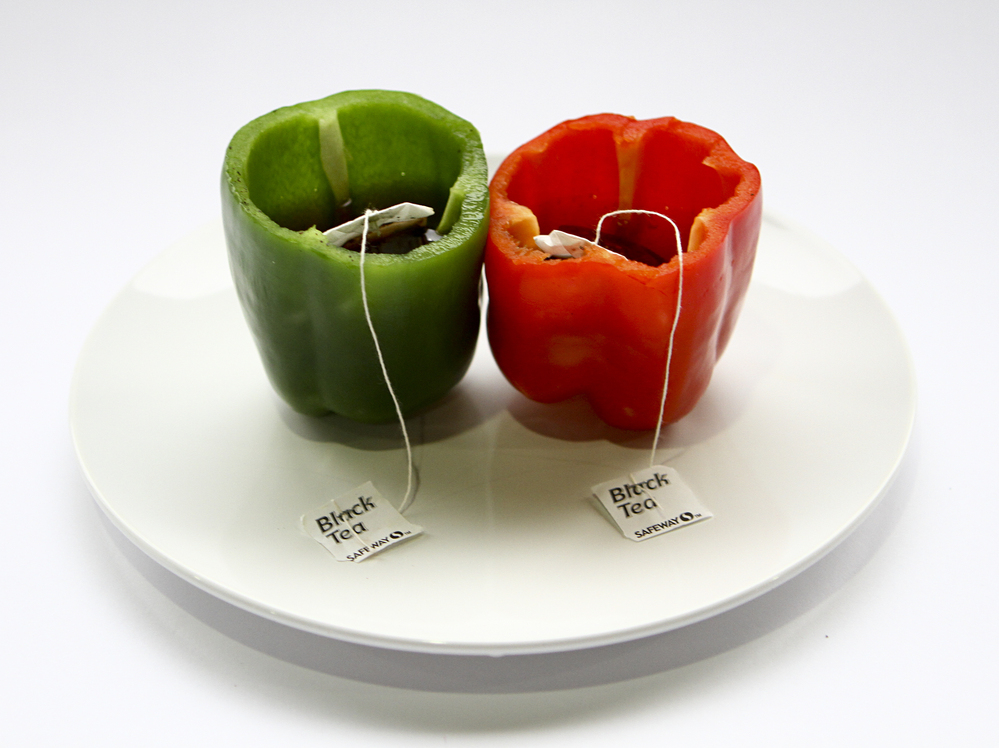
Does bell pepper and black tea sound appetizing? A computer may think so.

Ryan Smith/NPR Does bell pepper and black tea sound appetizing? A computer may think so. Does bell pepper and black tea sound appetizing? A computer may think so.

Ryan Smith/NPR

Mario Batali, watch your back.

Computer scientists at IBM have already built a computer that can beat human contestants on the TV quiz show, "Jeopardy." Now it appears they're sharpening their intellectual knives to make a computer that might someday challenge the competitors on "Iron Chef."

This is no trivial pursuit. Beating humans in a quiz show was a high-water mark for the computer science field. It meant designing a computer that understood how humans think. Now the plan is to design a computer that can understand how humans dream up new ideas, including new recipes.

"The goal in computational creativity is to come up with new things that have never been seen before," says Lav Varshney, a computer scientist at IBM. (Watch him explain the idea in the video below.)

Why focus on food? "Because food is so visceral," says Varshney. Everyone eats. It helps define our culture."

Culinary creativity isn't just about coming up with something novel. Varshney and his colleagues are hoping to make a computer that will be able to come up with recipes that taste good and don't add to our waistlines.

So how do you turn a computer into a culinary genius? The first step is to give the computer access to a database of recipes that are already being used successfully. "Then we remix them, substitute things, do all kinds of other modifications and generate millions of new ideas for recipes," says Varshney.

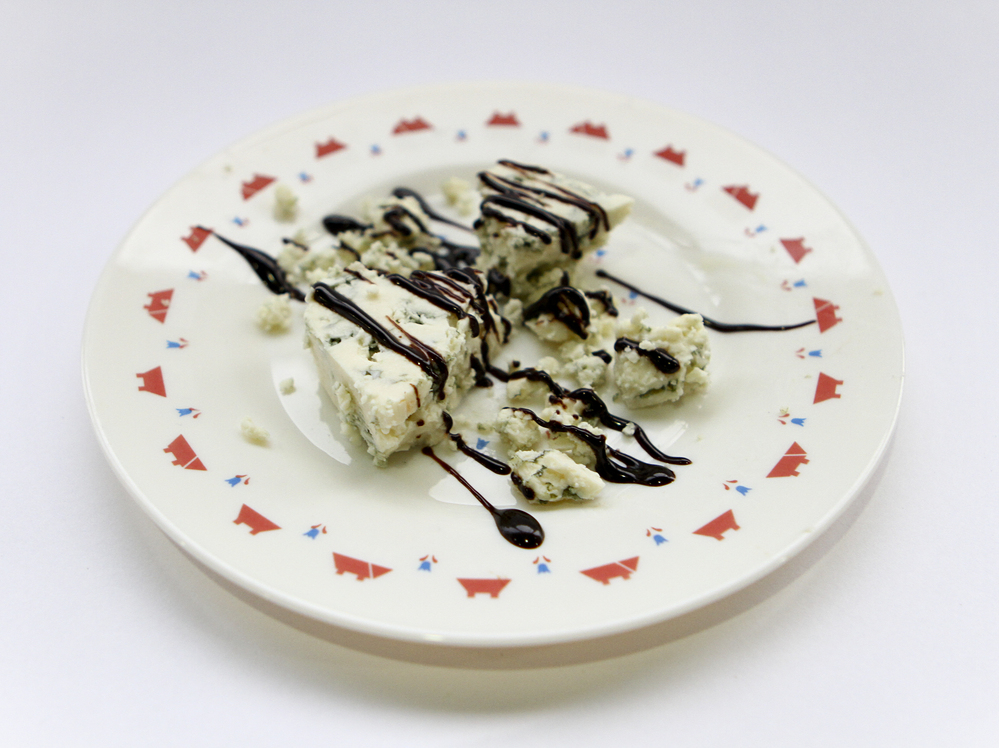
How about some chocolate drizzled over blue cheese?

Ryan Smith/NPR How about some chocolate drizzled over blue cheese? How about some chocolate drizzled over blue cheese?

Ryan Smith/NPR

"The second step is to take those millions of ideas and find the best ones. To do that we try to predict what humans will find flavorful, based on some basic ideas from chemistry and psychology."

For example, they started with an idea known as the flavor pairing hypothesis. "The basic idea is that two ingredients that share a lot of flavor compounds will go together well in Western cuisine," says Varshney. (We wrote about a University of Cambridge study on this concept just last year.)

But Varshney and his colleagues are not just interested in things that are flavorful, but also food combinations that are perceived as novel — like bell peppers and black tea, blue cheese and dark chocolate — even turmeric and black currants. They have some ideas from information theory and psychology that will help them come up with more.

The computer has already spit out some interesting suggestions. For example, last week Varshney and his colleagues tried a computer-generated recipe that was a mash up of a Spanish paella and an Indian curry. "It had turmeric and some other Indian spices and potatoes, pork and beef and then it has a kinda of a mango rum topping," says Varshney.

And how did it taste? "I'm actually vegetarian so I didn't eat that one, but the team did," he says. "They thought it was pretty good."

Varshney is hoping that their work will lead to make school lunches more attractive to students. They also hope it will help combat obesity by finding dishes that will satisfy people's food cravings without the accompanying calories.

Varshney says the work to create to a computerized top chef is just starting. IBM doesn't expect the computer will be ready for prime time for five years or so.


View the original article here

Despite Uneven Results, Alzheimer's Research Suggests A Path For Treatment

Brain scans using Amyvid dye to highlight beta-amyloid plaques in the brain. Clockwise from top left: a cognitively normal subject; an amyloid-positive patient with Alzheimer's disease; a patient with mild cognitive impairment who progressed to dementia during a study; and a patient with mild cognitive impairment.

Brain scans using Amyvid dye to highlight beta-amyloid plaques in the brain. Clockwise from top left: a cognitively normal subject; an amyloid-positive patient with Alzheimer's disease; a patient with mild cognitive impairment who progressed to dementia during a study; and a patient with mild cognitive impairment.

Slide courtesy of the journal Neurology

It's been a mixed year for Alzheimer's research. Some promising drugs failed to stop or even slow the disease. But researchers also found reasons to think that treatments can work if they just start sooner.

Scientists who study Alzheimer's say they aren't discouraged by the drug failures. "I actually think it was a phenomenal year for research," says Bill Rebeck, a brain scientist at Georgetown University.

Rebeck is optimistic because during the year, several very different lines of research all began to suggest a new way of thinking about Alzheimer's — that it has to be stopped before it damages the brain.

"Once you start to lose a lot of synapses, once you start to lose a lot of neurons, your brain can't recover from that," Rebeck says. "And so when we start with people who have symptoms of the disease, treating them turns out to be unsuccessful."

That explanation comes in part from studies that used a new research tool approved by the Food and Drug Administration in April. The tool is a drug called Amyvid that's injected into the bloodstream and travels to amyloid plaques in the brain. Those are the plaques associated with Alzheimer's.

The dye, also called florbetapir, lets researchers detect even tiny plaques using a positron emission tomography, or PET, scanner.

"In the PET scan you can see whether somebody has amyloid in their brain...before [they show] symptoms of the disease. I think that's huge," Rebeck says.

Researchers have already used the technique to show that amyloid begins to build up decades before people start having problems with memory or thinking. Rebeck says it should also provide a much quicker way to gauge whether a new Alzheimer's treatment is working.

Another advance this year was a study showing that the brain begins to function differently long before symptoms of Alzheimer's appear.

Lori Beason-Held of the National Institute on Aging presented the study at the Society for Neuroscience meeting. She says previous research had found brain changes among people in the early stages of Alzheimer's.

"Our study has gone back even further and discovered changes in the brain that occur up to 11 years before any symptoms occur in individuals who eventually become cognitively impaired," says Beason-Held. And the changes probably start even earlier, she says.

That might sound discouraging, but Rebeck doesn't see it that way. "What that says is there's an opportunity, there's a window when if we could stop that amyloid from accumulating, or start to clear it out of the brain, then you could prevent those symptoms from actually ever happening," he says.

Another study this year suggests a way to do that. Researchers in Iceland discovered that families with a rare gene mutation are much less likely to get Alzheimer's. The mutation appears to interrupt a key step in the formation of amyloid.

In order to form amyloid, the brain has to first cut up a larger molecule, explains Robert Vassar of Northwestern University. That step requires an enzyme called beta-secretase or BACE 1.

"BACE 1 is like a pair of molecular scissors, and what the mutation does is sort of interfere with the way the molecular scissors can cut. It sort of like, dulls the blades," Vassar says.

Just a few months ago researchers came up with a drug that does the same thing that the gene mutation does naturally, says Rebeck. This drug, though, may have to be administered before amyloid has begun to build up.

Michael Raffi, of the University of California, San Diego, says the new thinking about amyloid and Alzheimer's is a bit like the current approach to cholesterol and heart disease. Doctors don't wait until someone has a heart attack before putting them on drug that lowers cholesterol.

"Really the ideal situation is to have checked their cholesterol levels 15 years prior, and seen whether it was elevated, which would imply that they have an elevated risk of having the heart attack, and starting the medication then," Raffi says.

It's still not clear, though, whether amyloid is the new cholesterol. "It took a long time for us to make that connection between cholesterol and heart disease," says Rebeck. "That's been very successful. It's been very helpful in so many people's lives. We're just [at] earlier stages in studying Alzheimer's disease."


View the original article here

Killer's DNA Won't Explain His Crime

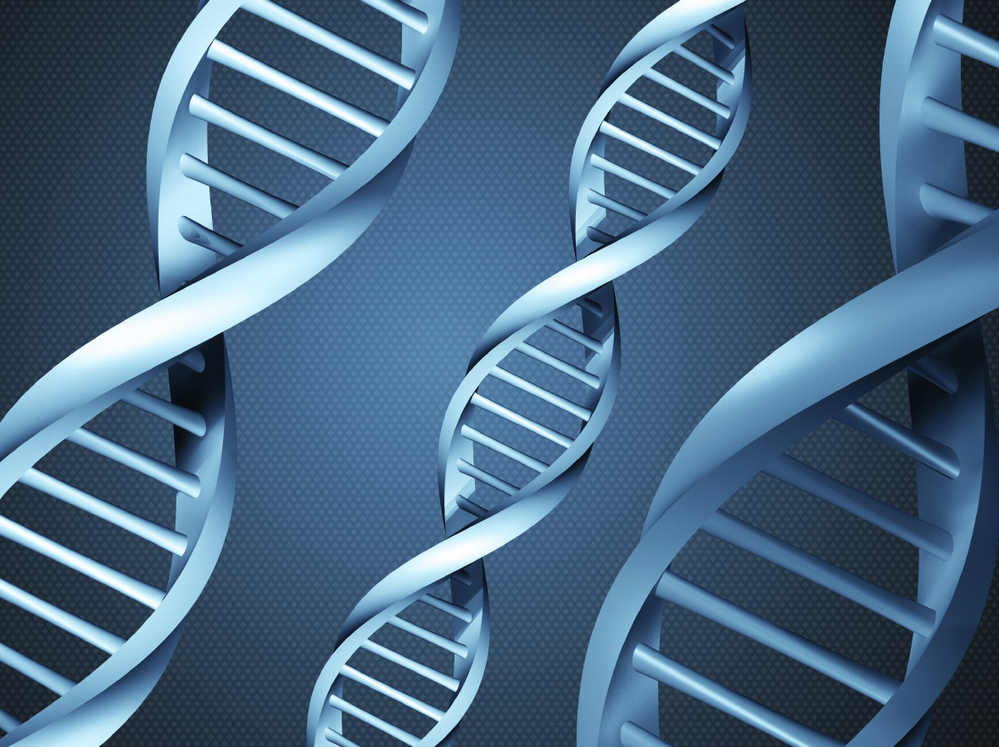
A person's DNA can say a lot about a person, but not why someone has committed a horrific crime like mass murder.

iStockphoto.com A person's DNA can say a lot about a person, but not why someone has committed a horrific crime like mass murder. A person's DNA can say a lot about a person, but not why someone has committed a horrific crime like mass murder.

iStockphoto.com

Connecticut's chief medical examiner, Wayne Carver, has raised the possibility of requesting genetic tests on Adam Lanza, the man responsible for the shootings at Sandy Hook Elementary School.

Carver hasn't said precisely what he may want geneticists to look for, but scientists who study the links between genes and violence say those tests won't reveal much about why Lanza did what he did.

Ellen Wright Clayton, a specialist in law and genetics at Vanderbilt University, says there aren't many possibilities. "The only thing they can be looking for here is to see whether the killer had certain genetic variants that may predispose to mental illness or to violence," she says.

Scientists have spent decades studying these genetic variants. But can a person's genes reveal why they commit mass murder?

"Absolutely not," Clayton says. "Genetic variants do not explain criminal behavior."

The strongest genetic link to aggressive behavior involves a gene known as MAOA. About a decade ago, Clayton says, researchers studied children with a particular variation in this gene.

"What they showed there was that kids who had the adverse genotype and who were also exposed to severe child abuse were more likely to have bad behavior as adults," she explains.

Other studies have confirmed that the gene variant by itself isn't a good predictor of violence. It only makes a real difference in people who carry the gene and were abused as children.

And of course the vast majority of people with the variant don't commit violent crimes.

Despite these caveats, evidence involving MAOA has been used in court. Some lawyers have argued that violent offenders who carry the gene should be held less responsible for their actions.

But the reaction of the courts has been mixed. "In some cases they have accepted it to mitigate penalties," Clayton says. "But in many cases they've decided that it's not pertinent for that purpose."

Other scientists say they also don't expect much from any genetic analysis of Lanza.

"It's not likely that they'll get any definitive answer. What they may get are some clues," says criminologist Adrian Raine, who studies antisocial behavior at the University of Pennsylvania.

Raine agrees with Clayton that one of those clues could involve the MAOA gene variant. But there's a hitch when it comes to Lanza. MAOA is associated with abnormalities in the brain that can result in so-called impulsive aggression — when a person throws a punch or pulls a gun in the heat of the moment.

"People who are impulsive and reactively aggressive have lower functioning in the very frontal region of the brain," Raine says. "In contrast those who plan and regulate their aggressive behavior, they do not have that specific brain abnormality."

That means MAOA isn't so good at explaining a premeditated mass murder.

Genetic analysis also can suggest whether a person is predisposed to developing depression, bipolar disorder, schizophrenia or autism, Raine says. But just having certain genes doesn't mean a person is destined to get any of these disorders. So any definitive diagnosis will require other types of information.

"Those clues will be more readily obtained from teachers, friends, relatives. That will certainly yield more information than genetic material," Raine says.

One reason researchers don't know more about genes and mass murder is that this sort of crime makes up only a tiny fraction of all homicides.

"We are looking at very rare behaviors. And from a scientific point of view we really don't study them in any systematic way," says Kevin Beaver, a criminologist at Florida State University.

Nonetheless, Beaver says he understands why people are desperately searching for answers after an event like the shootings at Sandy Hook Elementary.

"We want explanations. We want to understand why someone did this," he says. "But from a scientific standpoint, I don't think we would ever know why someone would engage in this type of horrific, violent behavior that's aimed at very young children."

That's not surprising. Researchers still haven't definitively explained what led to mass killings in Aurora, Blacksburg, or Columbine.


View the original article here

The Science Behind Santa's Christmas Eve Journey

With billions of children to visit in just one night, how does Santa make it to every house? And how does he fit down the chimney — assuming your house has one. Astrophysicist Neil De Grasse Tyson talks to David Greene about the science of Santa.

Copyright © 2012 National Public Radio. For personal, noncommercial use only. See Terms of Use. For other uses, prior permission required.

DAVID GREENE, HOST:

Rudolph the Red-Nosed Reindeer, as we all know, has a very shiny nose. And so would you, if you were at the head of a team of reindeer bolting across the night sky, helping Santa deliver Christmas presents to two billion children in a single night. Now, to help us understand how Santa manages to pull this off every year, we're joined by a friend of this program, astrophysicist and science guru Professor Neil deGrasse Tyson. And happy holiday to you, Professor Tyson. Thanks for coming on again.

NEIL DEGRASSE TYSON: Thank you. You know, you guys ask me about everything. Man.

GREENE: Well, you know everything. I mean, what do you want us to do? Well, this will be particularly interesting, I think, to a lot of people because it's - I mean, I'm sure that Santa employs some Christmas magic that's beyond our understanding to get all this done. But there must be some science involved, too, right?

TYSON: Well, a couple of things. Let's back up for a minute. So, Rudolph's nose...

GREENE: Right.

TYSON: ...now, to me, the word shiny means it reflects light. If you only reflect light, that's not really good to lead the way through the darkness of the night.

GREENE: 'Cause there's no light to reflect.

TYSON: You have to radiate light. So, let's presume that his nose actually radiated red light. Well, it turns out red light is ideal for getting through foggy, cloudy nights, because red light penetrates through fog better than blue light. And that's why, for example, they don't want you to put on your brights when you're driving through fog. The brights are bluer than your low beams. So, the fact that Rudolph has a red nose, that's awesome.

GREENE: You're saying Santa found the right reindeer.

TYSON: Yes, he did. (Laughing) Rudolph's brother, who had a blue nose, no. That would not have worked.

GREENE: You know, Santa has to go really, really, really fast to get to all these places in the world. I mean, is there a sense for what he's doing?

TYSON: OK. So, now, yeah. So, it turns out if he traveled the speed of light, you know, light can encircle the Earth seven times in one second.

GREENE: Seven times in a second, OK.

TYSON: Yeah, light is awesome. Problem is: We all live within Earth's atmosphere. So, if you could go that fast through the atmosphere, then you'll just burn up. And I learned from speaking to an expert in comic book heroes that the Flash has atmospheric separators in front of him when he goes quickly from one place to another so that he does not burn up.

GREENE: So, Santa could have atmospheric separators, in theory.

TYSON: He could have atmospheric separators. So, now, you can go keep doing this calculation, have him go to every home. So, I realized that what he really needs is that - what they have in that movie "Monsters, Inc."

GREENE: Yeah.

TYSON: You remember that movie where...

GREENE: I do, but remind me.

TYSON: ...just manufactured doors. And the door in the "Monsters, Inc." factory is the door of the children's closet. And you just carry the door home with you. You go through that door, and you show up in the kid's closet and terrorize them in their sleep, because they're monsters, of course.

GREENE: And if he can go in these secret doors in all the houses that don't have chimneys, I mean, that's - he's able to travel magically into a lot more homes.

TYSON: Yeah, so, in that point, it's not magic. What "Monsters, Inc." never told you is that they're essentially wormholes.

GREENE: So it is possible that he's just up there doing kind of a lap around the Earth to kind of get the - do the photo shoot, and he's actually delivering all these presents in some other way, using wormholes and other devices.

TYSON: Yeah, he could be up there just for show. You know NORAD, right?

GREENE: The military - the folks who track flying objects.

TYSON: Yes. These are the folks that track missiles coming in from the Cold War threat. After the Cold War, you know, they said: Well, what else are we going to do? So, at the 24th, you go to the NORAD website, and they track Santa from the North Pole. You can know where Santa is at all times.

GREENE: You know what's really interesting about all this, this could explain why the kids have never been able to catch him coming down the chimney. I mean, maybe he's got the kids distracted by that, and he's actually getting in in some other way.

TYSON: You know, that's brilliant. That's brilliant, because he has to keep telling people to look at the chimney, and then he sneaks in another way. He creates a distraction. Yeah, I'll go into that. Yeah.

GREENE: Yeah, let's work on that theory. Well, I hope you get everything you wish for. Neil deGrasse Tyson, thanks for talking to us, as always.

TYSON: Thank you. Always good to be on with you.

Copyright © 2012 National Public Radio. All rights reserved. No quotes from the materials contained herein may be used in any media without attribution to National Public Radio. This transcript is provided for personal, noncommercial use only, pursuant to our Terms of Use. Any other use requires NPR's prior permission. Visit our permissions page for further information.

NPR transcripts are created on a rush deadline by a contractor for NPR, and accuracy and availability may vary. This text may not be in its final form and may be updated or revised in the future. Please be aware that the authoritative record of NPR's programming is the audio.


View the original article here